
Volkswagen Think Small
In 1959 the adverising agency Doyle Dane Bernbach (DDB) were tasked with marketing the Volkwagen Beetle to an American market. The issue they had was pitching a car that was considered small, ugly and inexpensive compared to the large, angular and stylish cars that were being produced in America at the time.
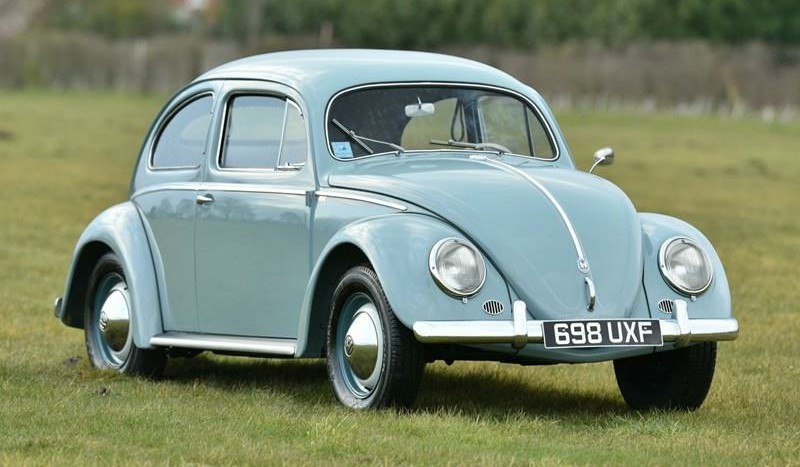
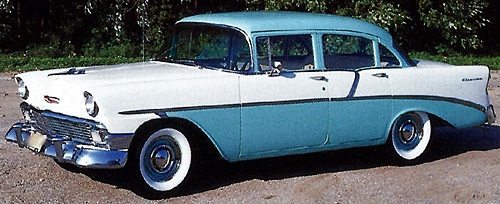
On top of this, the beetle owed it’s origins to the Nazi regime in a time where those connotations were still very fresh in the public’s mind and would have been off putting to many. The car was intended to be for the ordinary working German people. Not a flashy fashion statement as was popular in the USA.
So how did DDB not only manage to sell the beetle to the USA, but also cause a revolution in advertising in the process?
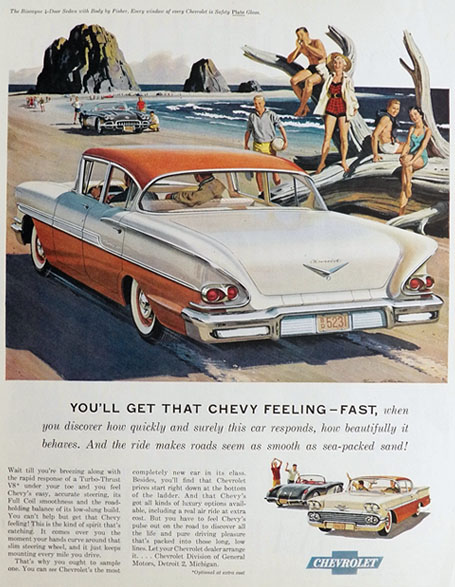
This Chevrolet ad from 1958 is typical of it’s time. The ad sells the car through it’s Unique Selling Proposition (USP), meaning that it simply highlights all of the benefits of the product that it’s competitors did not have. It also tries to sell the car through selling the lifestyle. The imagary shows young, stylish and attractive individuals enjoying themselves as if to say “This could be you!”. This applied to all manner of advertisments, not just in the automotive industry. As a result, this method of advertising became incredibly repetitive which made the public begin to switch off.
Along came DDB to flip the standard practices used in post-war adverising on their head.
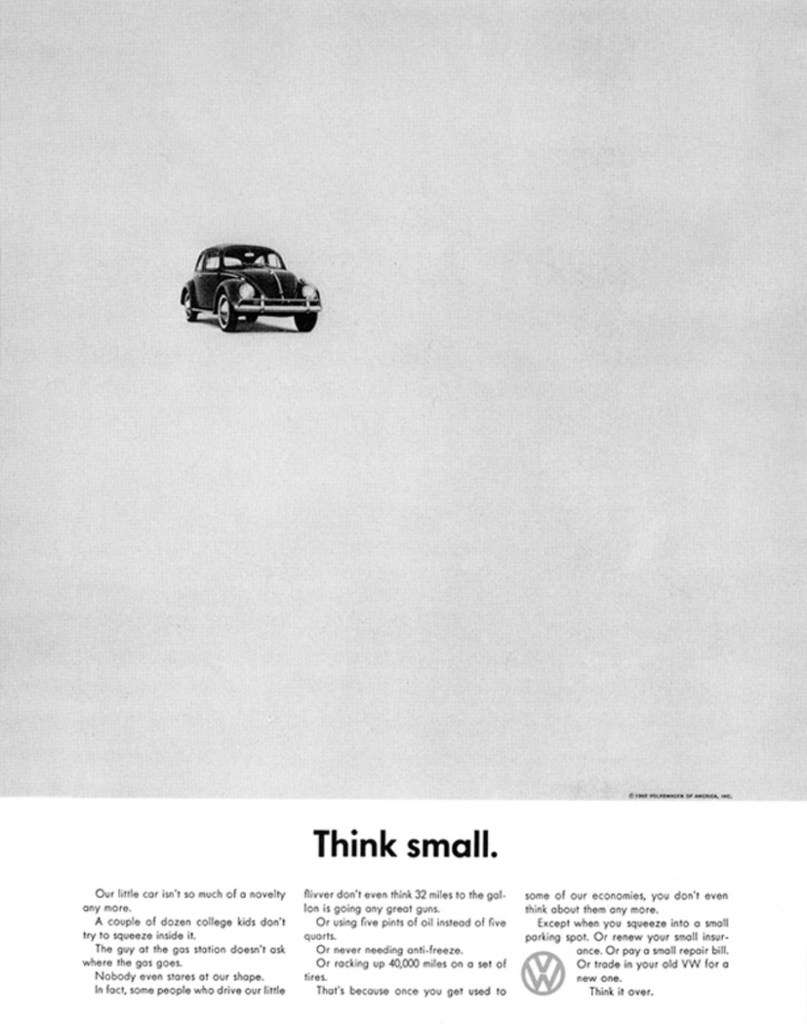
Instead of trying to sell the car as part of the American lifestyle, surrounded by smiling faces in suburbia, or looking out of place next to the typical cars of the era, the beetle is alone in a sea of white space. This would have demanded the attention of the viewer to be focused on the unique design of the car itself. At the time, the monochrome ad would have really stood out in a magazine contrasting the large colourful illustrations people were used to (and becoming bored of) seeing in advertisments.
The minimal design indicated honesty and simplicity. The headline “Think small.” was so understated that it would have been shocking to see in an advertisment at the time. This was also supported by the body text which told the truth about the car. Nothing was exaggerated and it was written with an almost self depreciating tone. The ad makes a statement about how this car was nothing like the desirable cars of the time but in a good way – it was practical and affordable.
Instead of using the full name ‘Volkswagen’, it was shortened to VW to reduce the negative connotations of it being a German car and to make it sound simpler and cooler.
This ad marked a shift in the way both consumers and advertisers thought about advertising. It was a shift towards transparency. Adverts didn’t need to talk down to consumers and simply hammer home the selling points, the tone of voice used became just as important. It was also part of a stylistic shift from the use of illustration to the use of photography in advertisment.
 Jemima's Designs - Blog